C-15 3rd Floor, Amar Colony Main Market,
Lajpat Nagar - 4,
New Delhi - 110024, India
Most teams don’t arrive looking for a single solution. It usually starts with a build or rebuild, then questions around performance, integrations, or scaling quietly follow. A simple application begins to touch payments, internal tools, third-party systems. Decisions made early start showing their impact. With Laravel service work, this becomes more visible. Architecture choices, hosting setup, even small workflow logic, they don’t stay isolated for long. One change tends to ripple. That’s why many businesses end up exploring adjacent areas. Not immediately, not all at once. But gradually, as the system grows and expectations shift. It’s less about adding services, more about aligning moving parts that were never meant to stay separate.
Some teams come to us after trying to piece together a Laravel setup across multiple vendors. Others already have something running, just not stable enough to scale. We’ve worked alongside early-stage founders testing their first product idea, and also with established businesses rebuilding internal systems that grew too fast, too loosely. Different stages, different pressures. In a few cases, the ask was very specific — improve performance, clean up code, make integrations behave. In others, it started with a simple Laravel service development service requirement and gradually expanded into something more connected. There’s no single pattern. Just teams trying to make their systems work the way their business already does.
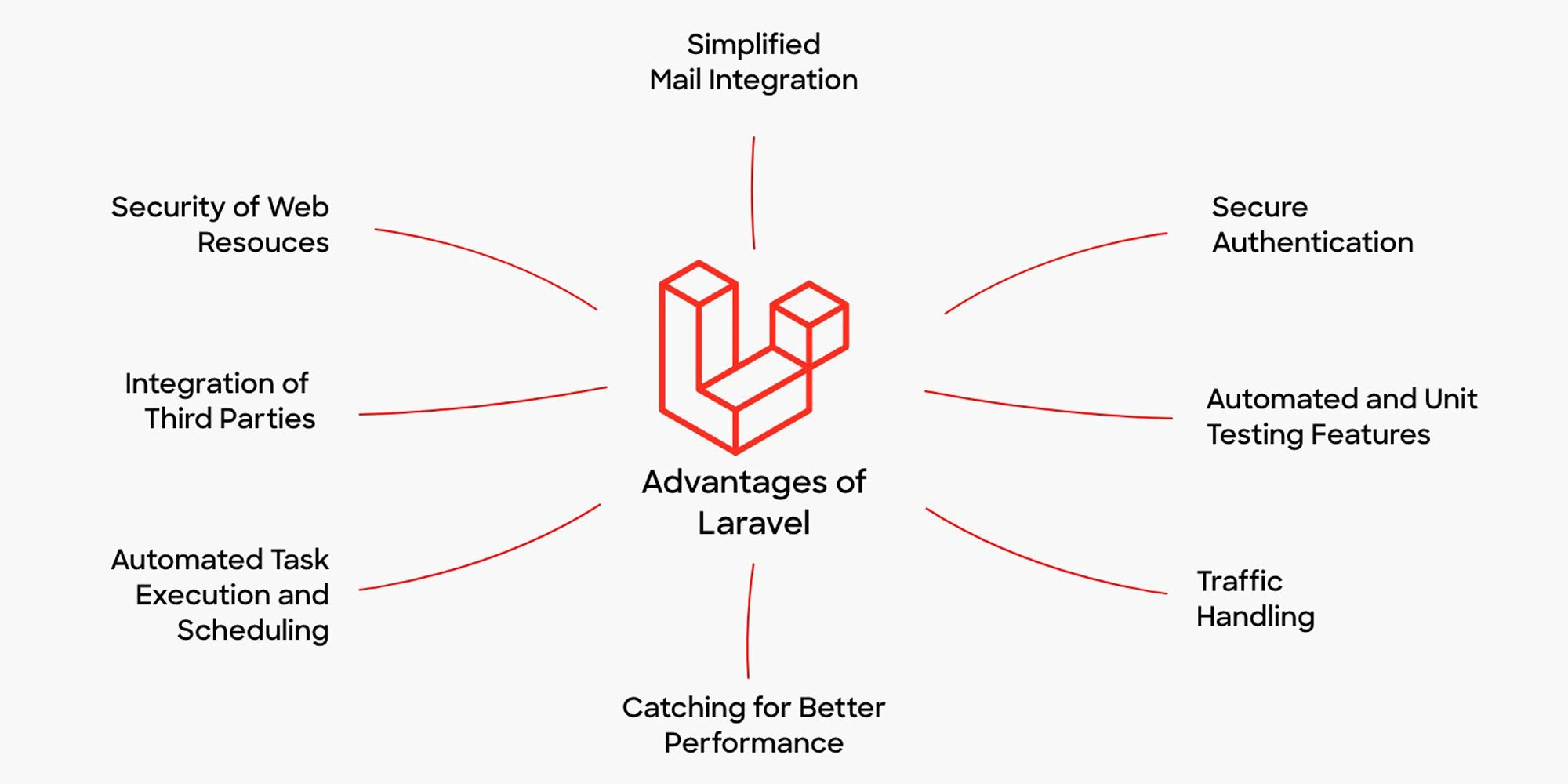
Look, the "PHP is slow" myth usually comes from people who haven't seen a properly tuned Laravel stack. At JIL, we treat Laravel as a high-performance engine. It’s not about the framework itself; it’s about how you architect the queues and the caching layers. We use Redis and horizon to manage heavy background tasks so the front-end never feels the lag. Over 25 years in the game has taught us that Laravel can handle massive scale, but only if you know how to strip out the middleware bloat that most "junior" shops leave in.
API "spaghetti" is a real problem in modern dev. We solve this by using a service-provider pattern that keeps the core logic totally decoupled from the third-party junk. Whether we are hooking into a legacy ERP or a modern fintech gateway, we build a "wrapper" that protects your app. If the external API changes their documentation tomorrow, your site doesn't go down. We just update the wrapper. It’s about building a fortress around your data, not just "connecting" points A and B.
Because "lazy loading" is a silent killer for database performance. Most developers just write a simple query and don't realize they've triggered the N+1 problem—essentially making a hundred database calls when one would do. The JIL tech team audits your Eloquent relationships to ensure eager loading is the default. We’re talking about taking a page load from 4 seconds down to 200 milliseconds just by being smart about how the data is pulled. It's the difference between a site that "works" and a site that flies.
Laravel is secure out of the box, sure, but that’s just the baseline. We go much deeper. We’re talking about custom-signed URLs for sensitive actions, forced 2FA for admin roles, and hardening the environment against mass-assignment vulnerabilities that "off-the-shelf" tutorials often miss. We don't just "deploy" code; we harden the server. At Jingle Infotech, we assume the environment is hostile from day one. By the time a vulnerability is even whispered about on Reddit, our clients' firewalls are usually already patched.
Upgrades are where most projects die a slow death. You see it all the time—a site stuck on an old PHP version because the developer is "scared" to run the update. We don't do that. We treat maintenance as a surgical process. We use automated test suites to catch "breaking changes" before they hit production. Our team refactors the deprecated code so your tech debt never piles up. You get the latest security features and the speed of the newest PHP engine without the "downtime" drama that most agencies charge extra for.