



C-15 3rd Floor, Amar Colony Main Market,
Lajpat Nagar - 4,
New Delhi - 110024, India



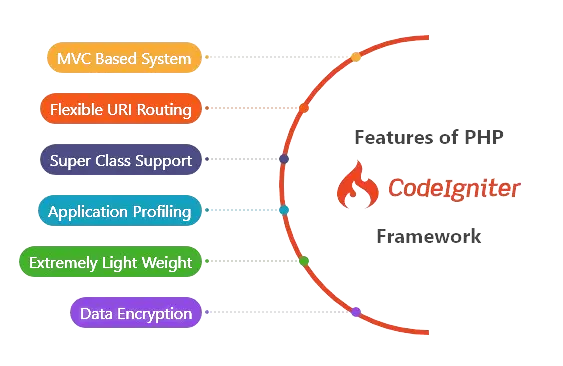
CodeIgniter is an important PHP framework because it is lightweight, fast, and easy to use. It follows the MVC architecture, which keeps code clean and organized, and offers built-in libraries for tasks like form validation, sessions, file uploads, and emails, making development quicker and simpler.
It also provides strong security features like XSS filtering, CSRF protection, and SQL injection prevention. With its flexibility, easy deployment, good documentation, and community support, CodeIgniter is ideal for rapid development and works well for both small and large-scale web applications.
Most teams don’t start with a full system in mind. It begins with a website, then a dashboard, then something internal that “just needs to work faster.” Over time, decisions stack up. One change starts affecting another. Performance tuning touches hosting. Feature changes start depending on database design. Security questions come in later, often after something breaks. We’ve seen businesses pause here. Not because they lack ideas, but because each addition feels heavier than the last. What helped earlier now starts slowing things down. This is where connected thinking matters. A backend framework is rarely isolated. It sits between customer experience, internal workflows, and infrastructure choices. Small adjustments in one layer can quietly change how the rest behaves. Some teams explore adjacent areas at this stage. Moving parts of the system to cloud environments. Reworking admin interfaces. Tightening access controls. Not all at once, and not always in a straight line. It’s less about adding more. More about making sure everything still moves the way it should.




Different kinds of teams. Different expectations. Early-stage founders trying to stabilise something they built quickly. Mid-sized businesses carrying systems that have grown unevenly over time. Enterprise teams with clear processes, but legacy layers underneath. Sometimes we step into ongoing work. Sometimes into situations where things have been paused for months. Retail businesses figuring out scale. Service companies managing internal tools that were never meant to grow this much. Teams that already have tech partners, but need a second perspective. Not every engagement looks the same. In some cases, the brief is clear. In others, it takes a few conversations just to define where the actual problem sits. There are teams who come in with detailed documentation. Others with just access credentials and a list of issues. Both are familiar.
Look, the "shiny object" syndrome in web dev is real. Everyone wants the newest, heaviest framework, but for many businesses, that's just unnecessary overhead. CodeIgniter is the "featherweight champion." If you need a high-speed portal that doesn’t require a $100/month (₹9,180/month) specialized hosting environment just to stay awake, CI is the answer. We’ve been using it for over two decades because its footprint is tiny. It’s about building a "lean" machine that loads in a blink, not a bloated app that makes your server sweat.
This is exactly where our 25 years of scar tissue comes into play. Most agencies will tell you to "scrap it and start over" because they don't know how to handle legacy PHP. We don’t do that. We treat it like a "restomod" car—we keep the body but swap out the engine. We can refactor your old CodeIgniter logic to run on PHP 8.x+, securing the holes and boosting speed without the $5,000+ (₹4,59,000+) price tag of a ground-up rewrite. It’s surgical, not destructive.
CI is great because it’s "unopinionated," but that means it doesn't hold your hand on security. If a junior dev builds it, they might leave you open to SQL injection or XSS. Our tech team hardens the "Shield" layer. We implement custom middleware for CSRF protection and use "Rate Limiting" to stop brute-force bots in their tracks. We don't just "write code"—we build a vault. At Jingle Infotech, we assume someone is trying to break in, so we lock the doors before we even hand over the keys.
Actually, it’s easier because there’s less "framework junk" in the way. Whether we’re hooking into an Indian payment gateway like Razorpay or a global CRM, we build "clean" libraries that don't depend on a thousand external packages. This keeps your site fast. You aren't paying for "features" you don't use. It’s a bespoke fit—like a tailored suit—rather than trying to make a "one-size-fits-all" framework work for your specific business logic.
It’s simple math. Because CI is so light on server resources, you can handle 3x the traffic on a basic $10 (₹918) VPS compared to heavier frameworks. That saves you a massive amount of "hidden" infrastructure costs over the year. For a growing business in India or overseas, those savings add up. We build for performance first, so your hosting bill doesn't grow faster than your revenue.